
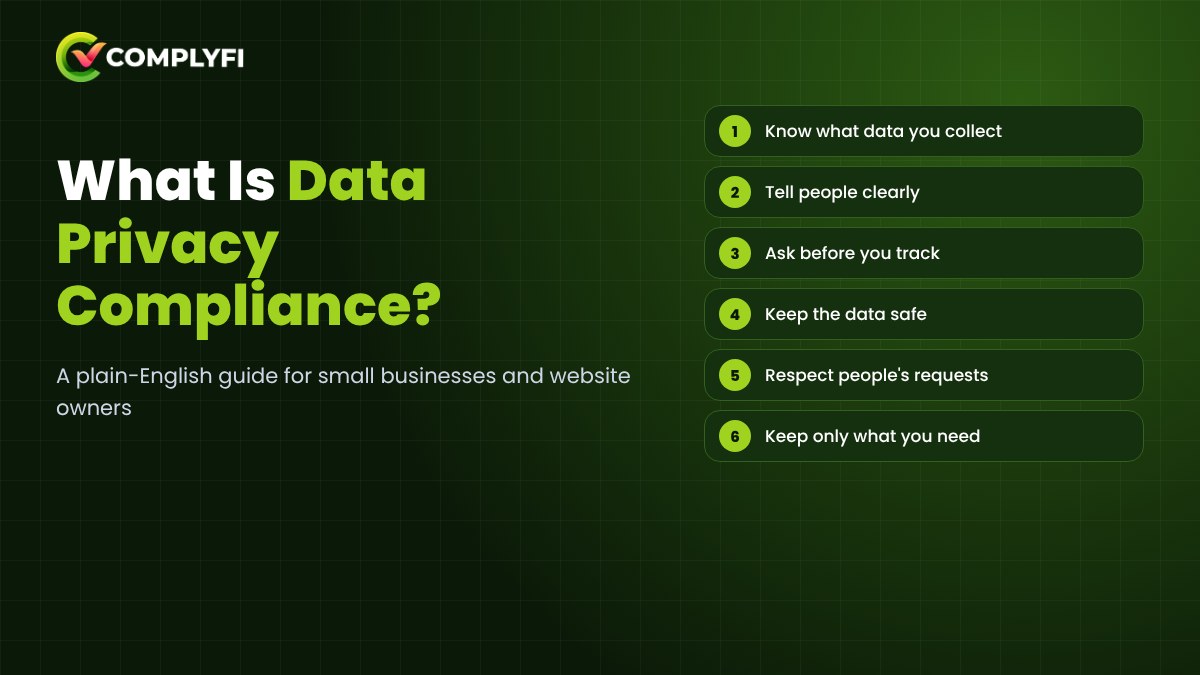
"Data privacy compliance" sounds like something only big companies with legal teams need to worry about.
It isn't. If your website has a contact form, a newsletter signup, an analytics script or an ad pixel, you're collecting personal data. And that means privacy rules probably apply to you too.
In this guide I'll explain what data privacy compliance actually means in plain English, the ideas most privacy laws share and a simple checklist for a typical small business website. If you already know the basics and want to compare tools, see our roundup of GDPR compliance software and the top tools leading the way.
One quick note before we start. This is a general guide, not legal advice. Laws differ by country and change over time, so for decisions about your specific business, talk to a qualified privacy professional.
What Is Data Privacy Compliance?
Data privacy compliance means handling people's personal information the way the law in their region expects you to.
That covers the whole life of the data. How you collect it. What you tell people about it. Why you use it. Who you share it with. How you protect it. How long you keep it. And what you do when someone asks to see it or delete it.
Personal data is broader than most people think. Names and email addresses, sure. But also IP addresses, cookie identifiers, location data and anything else that can be linked to a specific person.
So yes, your analytics script counts.
Which Privacy Laws Might Apply to You?
Here's the part that confuses people. Privacy laws usually follow your visitors and customers, not just your business address.
A small shop in one country can still fall under another region's rules if it offers goods or services to people there or monitors their behavior online.
A few well-known examples.
- GDPR in the European Union, one of the strictest and most widely copied privacy laws.
- The ePrivacy rules in the EU, often called the cookie law, which deal with storing cookies and trackers on people's devices.
- CCPA in California, along with a growing number of other US state laws.
- LGPD in Brazil, PIPEDA in Canada and POPIA in South Africa.
Each has its own thresholds, definitions and exceptions. Some only apply above a certain business size or data volume. That's exactly why checking with a professional matters.
The good news? They share a lot of common ground.
The Core Ideas Behind Most Privacy Laws
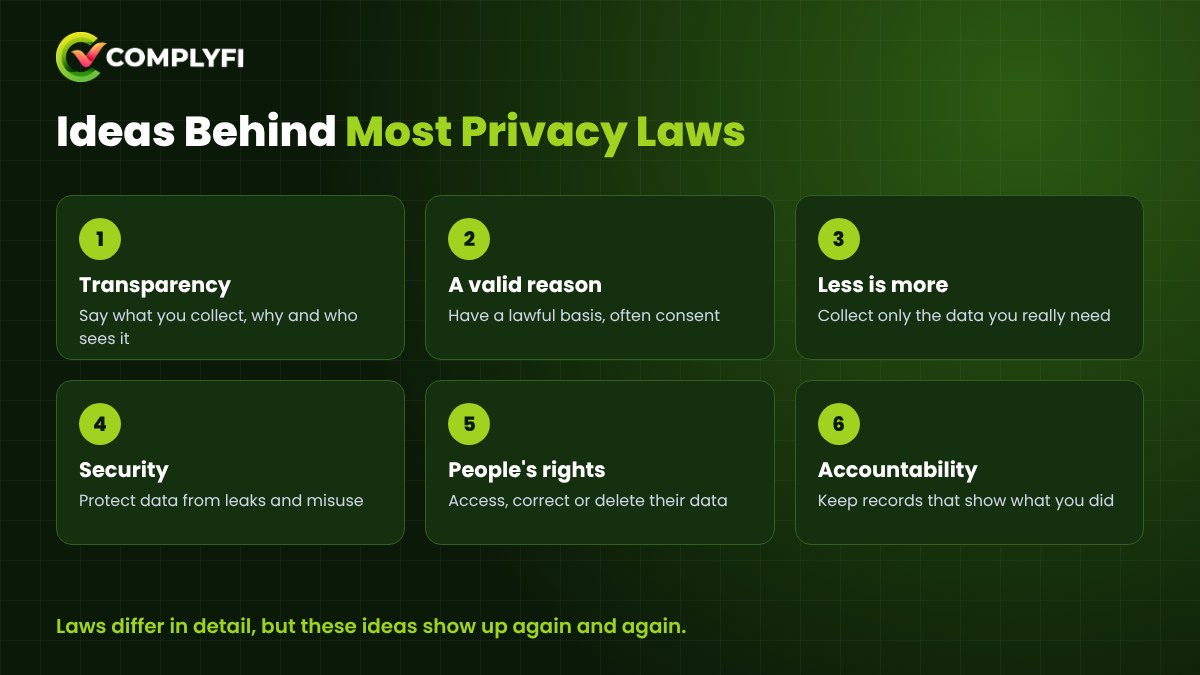
If you understand these six ideas, you understand the spirit of most privacy rules.
1. Be Transparent
Tell people what you collect, why you collect it and who you share it with. In clear words, not legal fog. This is what your privacy policy is for.
2. Have a Valid Reason
You need a legitimate basis for using someone's data. Under GDPR there are several, and consent is only one of them. For things like non-essential cookies and marketing trackers, though, consent is usually what's expected.
3. Collect Less
Only gather what you actually need. If your newsletter form asks for a phone number you never use, drop the field. Less data means less risk.
4. Keep It Secure
Protect personal data from leaks, theft and misuse. Strong passwords, limited access, updated software and trusted vendors all count.
5. Respect People's Rights
Many laws give people the right to see the data you hold on them, correct it, delete it or object to certain uses. You need a simple way for them to ask, and a process for answering.
6. Be Accountable
It's not enough to do the right thing. You should be able to show it. That means records, such as when and how someone gave consent.
Data Privacy vs Data Security
These two get mixed up all the time.
Data privacy is about the rules of use. Should you collect this? Did the person agree? Who gets to see it?
Data security is about protection. Is the data locked down so the wrong people can't get to it?
You need both. A perfectly secure database full of data you had no right to collect is still a privacy problem. And a well-written privacy policy won't help much if your customer list leaks.
A Quick Privacy Checklist for Your Website
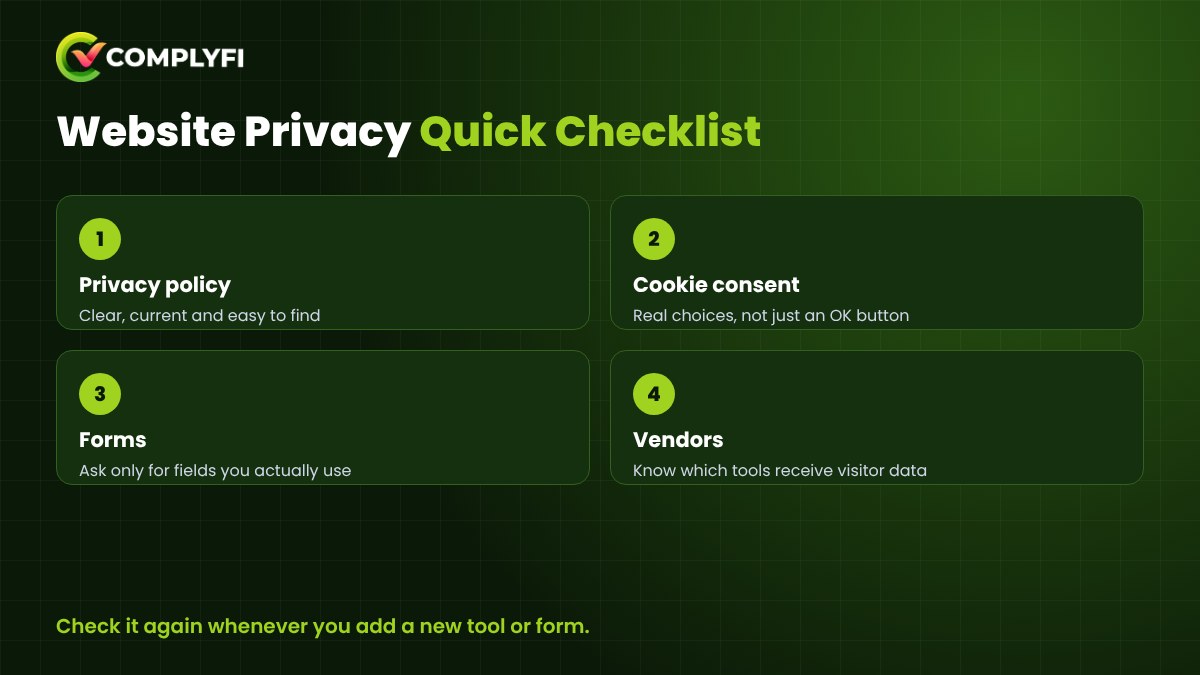
Most small businesses can make real progress in an afternoon. Here's where I'd start.
Map What You Collect
List every place personal data enters your business. Contact forms, checkout, newsletter signups, live chat, analytics, ad pixels, embedded videos. You'll probably find a few you forgot about.
Review Your Privacy Policy
Does it match what you actually do today? Policies written years ago often miss newer tools. Make it easy to find, usually in the footer of every page.
Fix Your Cookie Consent
A banner that says "This site uses cookies" with a single OK button often isn't enough, especially for visitors covered by EU rules. People generally need a real choice, the ability to change their mind later and trackers that wait until they agree. Our beginner's guide to cookie compliance goes deeper on this.
Trim Your Forms
Remove fields you don't use. Add a short note on how you'll use the information, and keep marketing opt-ins separate from the main purpose of the form.
Check Your Vendors
Your email platform, payment processor, analytics tool and chat widget all handle visitor data on your behalf. Know who they are and what they do with it.
Set Up a Way to Handle Requests
Give people a clear contact point for privacy questions. Some laws also require certain businesses to appoint a Data Protection Officer and publish their contact details.
Decide How Long You Keep Things
Old leads from five years ago? Abandoned carts from 2019? If you don't need it, delete it.
Why It's Worth Getting Right
Fines get the headlines. Under GDPR, the most serious violations can lead to fines of up to 4% of a company's worldwide annual turnover. Most small businesses won't face anything near that, but complaints and legal letters are stressful and expensive at any size.
There's a practical side too. Ad platforms increasingly expect consent signals. Google, for example, uses Consent Mode to pass visitors' consent choices to its ad and analytics tags, and that affects what you can measure and retarget.
And then there's trust. People notice when a site respects their choices. It's a small thing that makes your brand feel more honest.
How Complyfi Handles the Consent Side for You

Consent is the part of privacy compliance most website owners struggle with day to day. That's what we built Complyfi for.
Complyfi is a consent management platform. It scans your website with a real browser, finds the cookies it uses and sorts them into categories like vital, analytics and marketing. It then shows visitors a consent popup where they can make real choices and change them later.
It keeps a record of each visitor's consent with a unique identifier, supports Google Consent Mode V2 and Microsoft UET Consent Mode, and can show different popups to different regions. It also detects your visitor's language, lets you show your DPO's details inside the popup and sends you an email when someone submits a privacy query. You can pick from dozens of templates or style the popup with your own CSS.
To be clear, no tool makes a business fully compliant on its own. Your policies and practices still matter. But Complyfi takes a big, fiddly piece off your plate.
It costs $6.99 a month or $67 a year.
Final Thoughts
Data privacy compliance isn't one big task. It's a handful of good habits.
Know what you collect. Tell people honestly. Ask before you track. Keep data safe. Answer requests. Delete what you don't need.
Start with the checklist above and get professional advice for anything specific to your business. When you're ready to compare platforms that help, our guide to GDPR compliance software and the top tools leading the way is a good next read.
FAQs About Data Privacy Compliance
Does data privacy compliance apply to small businesses?
Often, yes. Many privacy laws apply based on whose data you handle, not how big you are, though some have size or volume thresholds. If you collect any personal data online, it's worth checking which rules cover your visitors.
Is a privacy policy enough?
Usually not. A policy explains what you do. Compliance also depends on actually doing it, such as getting consent where needed, protecting data and responding to requests.
Are IP addresses personal data?
Under GDPR, IP addresses can count as personal data because they can be linked to a person. Other laws treat them in similar ways, so it's safest to handle them with care.
Do I need a lawyer?
For general housekeeping, many owners start on their own with guides like this one. For decisions about your specific obligations, especially if you handle sensitive data or operate across several regions, a qualified privacy professional is worth it.